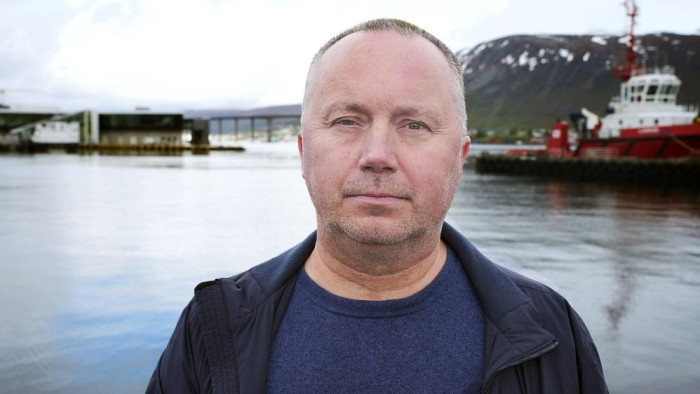
A European Arrest Warrant has been issued against Tommy Olsen, founder of Aegean Boat Report
He is currently detained in Norway and is facing extradition to Greece.
Fair Trials is concerned about the arrest of Tommy Olsen, founder of Aegean Boat Report, an organization that monitors and reports on issues related to people movement in the Aegean Sea, particularly on actual incidents of people crossing the Sea and governments’ responses to them.
The arrest of Tommy Olsen, given that no trial has been set, is based on a warrant whose necessity has not been demonstrated by the available evidence
Based on information available to Fair Trials, when summoned by the investigative judge, Tommy Olsen did not ignore the process. He did not refuse to engage. Greek procedural law allows defendants to respond to a judicial summons in writing through their lawyer, without appearing in person. He exercised that right. The judge accepted it and did not require his physical presence. By any reasonable standard, he cooperated with the investigation.
And yet, a warrant was issued.
This is distinct from the question of whether the underlying charges are justified.
The European Arrest Warrant was designed to prevent flight, to secure presence at trial, to enforce a sentence. It can be issued for the purposes of criminal prosecution, but its use must be proportionate to the circumstances. Issuing a warrant against someone who engaged with the judicial process through its own legally prescribed mechanisms, with no trial date set and no demonstrated risk of flight, raises serious questions of proportionality. When a warrant functions in this way, it does not secure justice; it anticipates it. The effect is pre-sentencing: detention and legal uncertainty imposed before any court has ruled.
This is not a new problem. Fair Trials has documented for years the disproportionate use of the EAW and the criminalisation of human rights defenders across multiple jurisdictions. The EAW is a legitimate instrument of judicial cooperation, but it has been systematically overused. Our research shows that this overuse has a direct and recurring consequence: the disproportionate application of pre-trial detention in EAW proceedings, often based on standardised, unclear assessments of detention grounds that fail to reflect the actual circumstances of the individual case. Tommy Olsen’s situation is a precise illustration of that pattern.
In Greece, there is a documented and growing pattern of serious criminal charges and coercive pretrial measures, deployed specifically against activists and human rights defenders who monitor, document, and report on human rights violations at Europe’s borders. People who work to ensure those violations do not go unnoticed.
That pattern has consequences far beyond the individuals targeted. When the people who expose abuses become the accused, the system is no longer delivering justice; it is being used to punish those who demand it.
We call on the Norwegian authorities to exercise their right to full scrutiny before any decision on surrender, including their right to refuse the extradition of their own nationals, and on EU institutions to address the growing misuse of the European Arrest Warrant as a tool of pressure rather than justice.